Singapore
Chinatown, Little India & Arab Street: Understanding Singapore’s Most Cultural Neighbourhoods
Singapore is often described as a melting pot of cultures, but nowhere is that more visible than in Chinatown, Little India, and Arab Street. These three neighborhoods sit just minutes apart, yet each tells a completely different story about migration, identity, faith, trade, and everyday life.
Many visitors include them on their itinerary. Fewer truly understand what they’re seeing.
More Than Temples, Mosques and Photo Stops
A common assumption is that Chinatown is “Chinese,” Little India is “Indian,” and Arab Street is “Malay or Arab.” In reality, Singapore has never worked that way.
Cultures here have always overlapped, shared space, and influenced one another.
It’s not unusual to find:
- An Indian temple in the heart of Chinatown
- Chinese businesses operating next to mosques
- Multiple religions sharing the same street
- Communities living side by side for generations
This close coexistence is not accidental—it’s part of how Singapore developed, and understanding this changes the way you see these neighborhoods entirely.
Chinatown: A Living Neighbourhood, Not a Museum
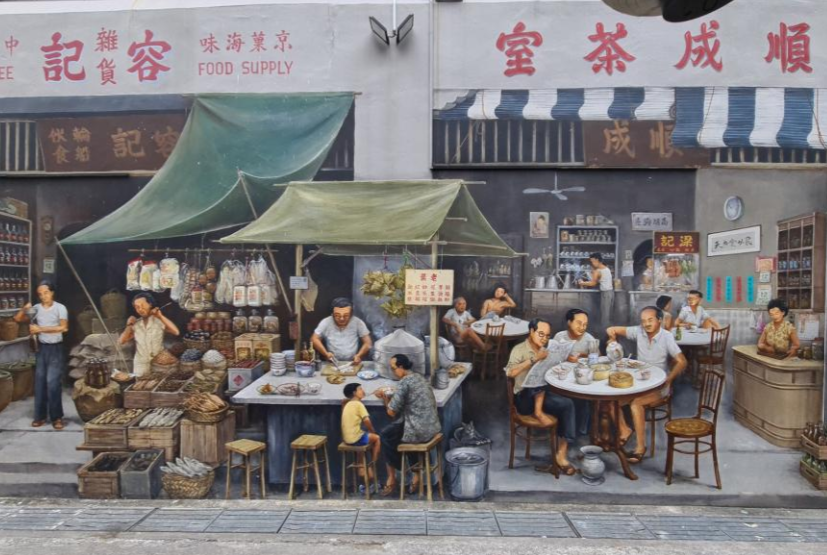
Chinatown is not just about heritage temples or souvenir streets. It’s a place where:
- Traditional medicine shops still operate
- Locals shop for produce and household goods
- Clan associations quietly preserve family histories
- Old shophouses coexist with modern cafés and offices
Understanding Chinatown means knowing how people lived, worked, and adapted—and how that legacy still shapes the area today.
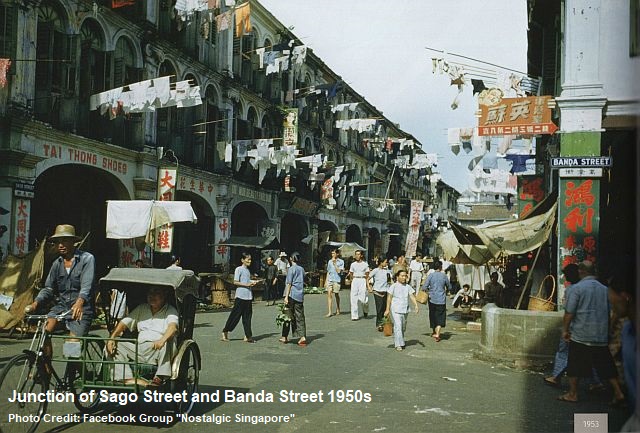
Chinatown makes the most sense when you realise it was never isolated—it grew alongside other communities.
Little India: Daily Life in Full Colour
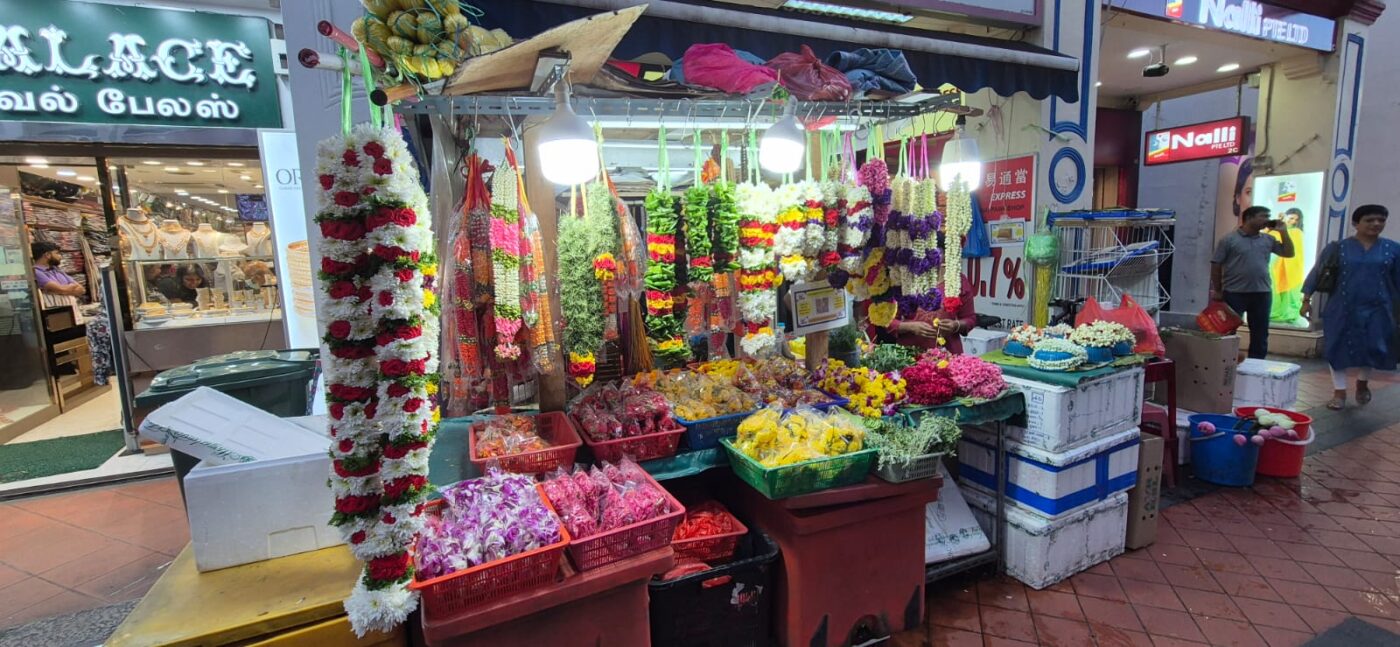
Little India is vibrant, noisy, aromatic, and deeply communal. Beyond the obvious colours and landmarks, this area reflects:
- Strong family and community ties
- Daily rituals that happen outside formal religious spaces
- A blend of old traditions and modern Singaporean life
What looks chaotic at first glance often makes perfect sense once explained.
Arab Street & Kampong Glam: Trade, Faith, and Reinvention
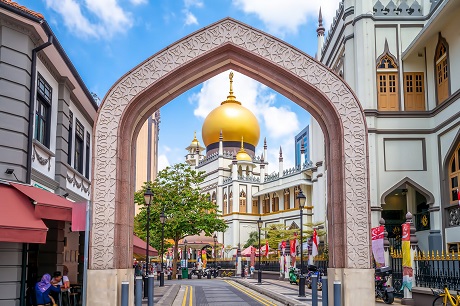
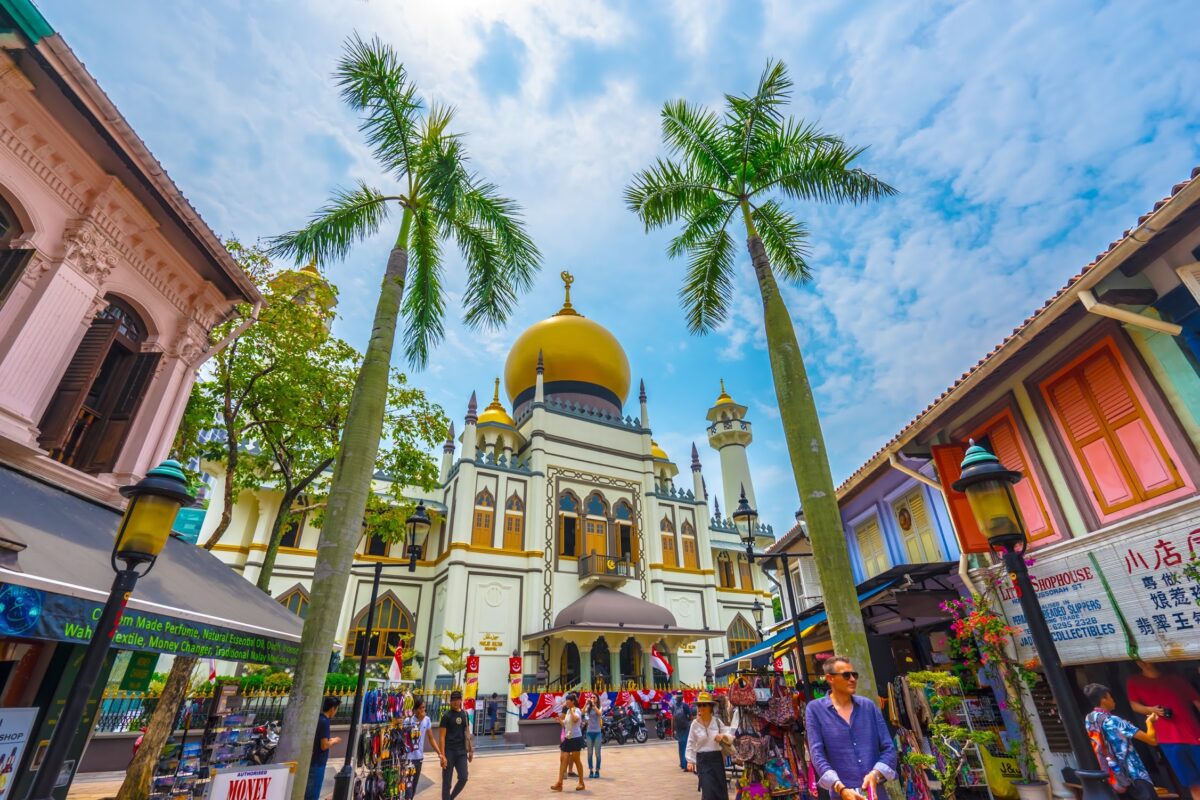
Arab Street is often associated with the mosque—and rightly so—but its story is also about:
- Textile and spice trading networks
- Malay and Arab heritage
- How a historic district reinvents itself without losing identity
Like the other districts, this area has evolved without losing its identity, blending history with contemporary life in a way that feels uniquely Singaporean.
Why Context Changes Everything
Without explanation, visitors often:
- Focus only on places of worship
- Miss everyday details
- Rush from landmark to landmark
- Leave with photos but little understanding
Knowing why there’s an Indian temple in Chinatown—or how different communities have coexisted peacefully for decades—adds meaning to what you’re seeing.
A More Meaningful Way to Experience These Neighbourhoods
The richest experiences usually happen when:
- Groups are small enough to ask questions freely
- There’s time for conversation, not just walking
- The focus can shift depending on interests—daily life, food, customs, or history
Everyone connects with culture differently, and flexibility makes a big difference.
Chinatown, Little India, and Arab Street aren’t separate cultural bubbles. They are interconnected neighbourhoods that reflect how Singapore truly works—diverse, shared, and deeply intertwined.
If you enjoy learning through conversation, understanding context, and seeing beyond the obvious, you may find that experiencing these areas with a knowledgeable local in a small group offers far more depth than exploring on your own.
👉 If that sounds like your kind of travel experience, our small-group tours are designed with exactly this approach in mind. Join us and discover a side of Singapore you won’t find in guidebooks.